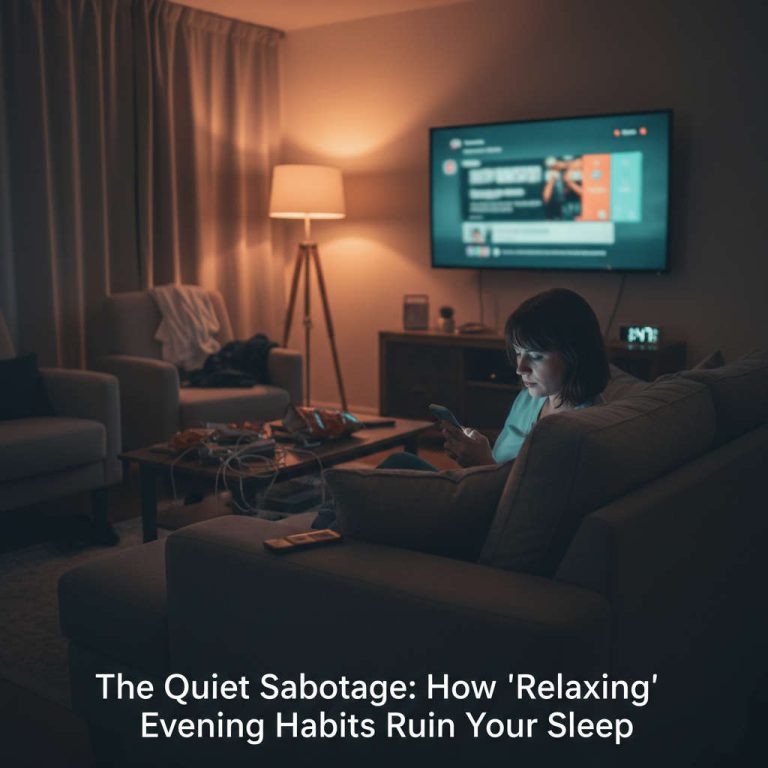
You finish work, eat dinner, and finally sink into the couch. The day’s demands are done. Now it’s time to relax.
You scroll social media. Watch a show. Answer a few texts. Maybe have a glass of wine. It feels like unwinding.
But hours later, lying in bed, your mind won’t quiet. Your body feels restless. Sleep stays frustratingly out of reach.
What if your “relaxing” evening is actually sabotaging your sleep?
Many common evening habits feel calming but physiologically prepare your brain for wakefulness. The disconnect between how something feels and what it does explains why so many people struggle despite good intentions.
Habit 1: Screen Time Until Bed
The glow of phones, tablets, and televisions isn’t neutral.
Screens emit blue-wavelength light that suppresses melatonin—the hormone that signals night has arrived. Even dim screens in dark rooms have this effect because your eyes are adapted to darkness.
But the problem goes beyond light.
Content matters.
Scrolling social media exposes you to:
- Other people’s highlight reels (triggering comparison)
- News and opinions (activating vigilance)
- Unexpected information (engaging attention)
Even funny or interesting content keeps your brain processing when it should be winding down. Each piece of new information says, “Stay alert—something’s happening.”
Watching television isn’t much better. Dramatic tension, cliffhangers, and emotional engagement all stimulate the same alertness systems.
What helps:
- Create a screen sunset 60-90 minutes before bed
- If you must use screens, wear blue-blocking glasses
- Choose passive, familiar content (rewatching comfort shows)
- Dim screens to lowest brightness
Habit 2: The Nightcap
Alcohol feels like sleep insurance. It relaxes you, eases anxiety, and helps you drift off faster.
But alcohol’s effect on sleep is deceptive.
As your liver metabolizes alcohol through the night, several things happen:
Sleep fragments
After initial sedation wears off, alcohol triggers more frequent awakenings. You may not remember them, but your sleep quality suffers.
REM sleep reduces
Alcohol suppresses rapid eye movement sleep—the stage associated with emotional processing and memory consolidation. Less REM means less psychological restoration.
Midnight alertness increases
Around 3-4 AM, as alcohol clears your system, your body experiences a mild withdrawal effect. This often causes sudden wakefulness with anxiety.
Dehydration follows
Alcohol is a diuretic. Nighttime bathroom trips increase. Dehydration worsens next-day fatigue.
What helps:
- Limit alcohol to earlier evening hours
- One drink maximum if sleep matters
- Alternate with water
- Stop alcohol at least three hours before bed
Habit 3: Late Eating
Digestion requires energy and elevates body temperature—both opposite of what sleep requires.
When you eat close to bedtime:
Body temperature rises
Sleep onset requires core temperature drop. Digestion generates heat, delaying this drop.
Blood sugar fluctuates
Large meals, especially high-carb meals, cause blood sugar spikes followed by drops. Drops trigger stress hormones that disrupt sleep.
Digestion continues
Your body can’t fully rest while processing food. Gut activity sends signals to the brain that interfere with deep sleep.
Acid reflux increases
Lying down with a full stomach allows acid to travel upward, causing discomfort even if you don’t fully register it.
What helps:
- Finish last meal 3 hours before bed
- If hungry later, choose small, easily digestible options
- Avoid spicy, acidic, or heavy foods near bedtime
Habit 4: Intense Evening Exercise
Exercise is excellent for sleep—when timed properly.
Intense exercise elevates:
- Heart rate
- Body temperature
- Stress hormones (temporarily)
- Sympathetic nervous system activity
These changes are healthy during the day. But close to bedtime, they signal “activation” to a body that needs “shutdown.”
What helps:
- Complete intense workouts at least 3 hours before bed
- Evening exercise should be gentle: walking, stretching, yin yoga
- Hot baths or saunas followed by cooling can aid sleep (temperature drop triggers sleep)
Habit 5: The Mental To-Do List
For many people, evening is the first quiet moment of the day. And quiet moments invite the brain to process everything it didn’t have time to process earlier.
Suddenly, you remember:
- The email you forgot to send
- Tomorrow’s meeting you’re unprepared for
- The conversation that bothered you
- Everything on your to-do list
This isn’t relaxation. It’s deferred processing.
What helps:
- Create a “brain dump” practice 1-2 hours before bed
- Write down everything on your mind—tasks, worries, ideas
- Assure your brain: “It’s written down. You don’t need to hold it.”
- Review tomorrow’s calendar briefly, then set it aside
Habit 6: The Argument You Didn’t Mean to Have
Evening conversations with partners or family can turn difficult when both people are tired.
Tired brains:
- Have less impulse control
- React more emotionally
- Struggle with perspective-taking
- Default to defensive patterns
A minor disagreement at 10 PM becomes a major conflict that floods both people with stress hormones hours before sleep.
What helps:
- Recognize “tired conversations” as high-risk
- Table difficult discussions for morning when possible
- If conflict arises, pause and agree to revisit tomorrow
- Prioritize connection over resolution late at night
Habit 7: The “Just One More” Mentality
How many times have you thought: Just one more episode. Just a few more minutes scrolling. Just finish this chapter.
This mentality delays sleep not by hours but by minutes—and minutes add up.
But the real cost isn’t lost sleep time. It’s the mental activation of “one more.” Each extension tells your brain: This matters more than rest.
What helps:
- Set a hard stop time, not a “try to” time
- Create a physical cue (lights dim, devices away)
- Remember: whatever you’re doing will still be there tomorrow
- Prioritize your rested self over your entertained self
What Genuine Evening Wind-Down Looks Like
True relaxation prepares the nervous system for sleep. It’s often quieter than you expect:
- Dim lighting
- No screens
- Gentle movement or stretching
- Reading (physical books)
- Conversation (non-intense)
- Warm bath or shower
- Breathing practices
- Simple presence
It doesn’t feel exciting. That’s the point.
Sleep isn’t something you do. It’s something you allow. And allowing requires creating space—not filling every moment with stimulation disguised as relaxation.
The Morning Test
Here’s a simple way to evaluate your evening habits:
How do you feel when you wake?
If you wake refreshed without an alarm, your evening routine is working. If you wake exhausted, dragging, or dependent on caffeine—something in your evening is likely sabotaging your night.
You don’t need perfect habits. You need awareness of which habits serve you and which quietly steal your rest.
Start with one change this week. Maybe earlier screens. Maybe earlier eating. Maybe just sitting in the dark for ten minutes before bed.
Small shifts compound. And over time, your evenings transform from quiet sabotage into genuine restoration.