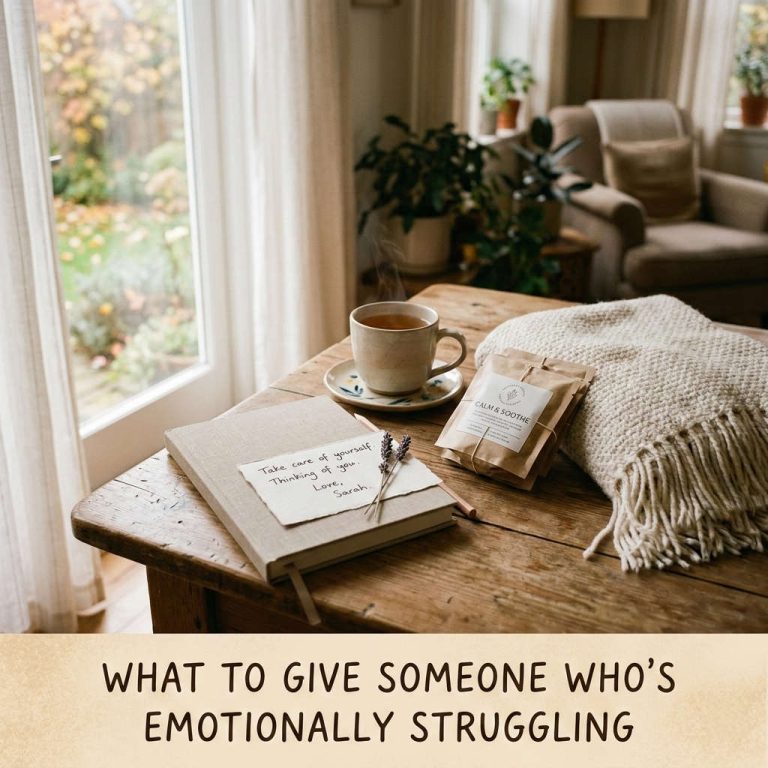
When someone you care about is emotionally struggling, the hardest part is often knowing what to do.
Words feel inadequate.
Advice feels risky.
And silence can feel like abandonment.
So people turn to gifts — hoping to offer comfort when explanations fall short.
But emotional support isn’t about finding the perfect gift.
It’s about choosing something that quietly says:
“You don’t have to handle this alone.”
Why Emotional Struggles Require a Different Kind of Gift
During stress, heartbreak, anxiety, or burnout, the brain becomes overloaded.
Simple decisions feel exhausting.
Sleep becomes inconsistent.
Emotions fluctuate quickly.
In this state, people don’t need stimulation or excitement.
They need regulation.
The best gifts reduce emotional pressure rather than adding expectations.
The 4 Most Supportive Types of Gifts
Instead of focusing on price or originality, focus on emotional function.
1. Comfort-Based Gifts (Calming the Nervous System)
Emotional stress activates the body’s threat response, keeping the nervous system in a heightened state of alert. Comfort-based gifts help signal safety again, allowing the body and mind to gradually relax.
Helpful examples include:
- soft blankets
- warm lighting
- calming teas
- soothing textures
These items work because physical comfort directly supports emotional regulation. When the body feels safe, the mind often follows.
Supportive Idea:
Many people find weighted blankets especially helpful during emotionally difficult periods. The gentle, even pressure can create a calming effect similar to a reassuring hug, helping reduce restlessness and promote deeper, more restorative sleep.
🛌 Recommended Comfort Item
A quality weighted blanket can provide soothing pressure that supports relaxation, stress relief, and improved sleep — particularly during times of emotional overwhelm.
Recommended:
YnM Weighted Blanket (Cooling Cotton Design)
- Evenly distributed weight for calming pressure
- Breathable cotton fabric for year-round comfort
- Helps promote relaxation and deeper sleep
2. Expression Gifts (Helping Feelings Move)
People who are emotionally struggling often carry thoughts and feelings they cannot easily express out loud. Writing provides a safe, private outlet where emotions can move instead of staying bottled up.
Good options include:
- guided journals
- gratitude notebooks
- reflection workbooks
Journaling helps organize emotions without judgment or pressure. It allows someone to slow their thoughts, gain clarity, and process feelings at their own pace.
Supportive Idea:
A simple guided reflection journal can help someone gently work through overwhelming emotions. When feelings become heavy or confusing, writing them down helps calm the mind and create emotional space.
Guided journals are especially helpful because prompts remove the pressure of “knowing what to write.” Instead, they offer small daily reflections that make emotional processing feel safer and more manageable.
A daily journal focused on gratitude, emotional awareness, or self-reflection can become a powerful first step toward mental clarity and healing.
📘 Recommended Guided Journal
A structured guided journal with daily prompts and emotional check-ins can make self-expression easier — especially when words don’t come naturally.
Recommended:
The Five Minute Journal (Intelligent Change)
- Encourages gentle daily reflection
- Builds emotional awareness through simple prompts
- Takes only a few minutes each day, making it easy to maintain
3. Stability Gifts (Restoring Daily Rhythm)
Stress disrupts routines — and routine loss increases anxiety.
Gifts that rebuild gentle structure can help:
- daily planners
- habit trackers
- calming morning routines
- sleep-support tools
Small predictable habits restore emotional balance over time.
Link here to Relationship Recovery & Healing cornerstone page.
4. Presence-Based Gifts (Often Overlooked)
Sometimes the most meaningful gift isn’t an object.
It’s permission to slow down.
Examples include:
- handwritten notes
- shared quiet activities
- low-pressure companionship
These communicate emotional safety — one of the strongest healing factors in relationships.
Emotional Safety: The Missing Piece in Most Relationships
What Not to Give Someone Who Is Struggling
Certain gifts unintentionally create pressure:
❌ overly motivational books (“just be positive”)
❌ problem-solving advice disguised as gifts
❌ anything implying they should “move on faster”
When someone is hurting, validation matters more than solutions.
Why Small Gifts Often Mean More
Emotional pain narrows attention.
Large gestures can feel overwhelming.
Small, thoughtful items succeed because they are:
- easy to accept
- emotionally safe
- usable daily
- quietly supportive
Healing happens through repetition, not intensity.
Supporting Without Trying to Fix
One of the biggest misconceptions about emotional support is believing you must solve the problem.
You don’t.
The goal is to reduce loneliness within the experience.
A thoughtful gift simply communicates presence — and presence reduces emotional stress more than advice ever could.
If emotional struggles are connected to a breakup or relationship loss, understanding the psychology behind recovery can make the process feel far less confusing.
The Ex Factor Guide explains how emotions shift after separation and what actually helps healing and reconnection over time.