When anxiety spikes, the mind often races ahead of the present moment.
Thoughts jump between worries, worst-case scenarios, and imagined problems that haven’t happened yet. The body reacts as if danger is real — even when you’re physically safe.
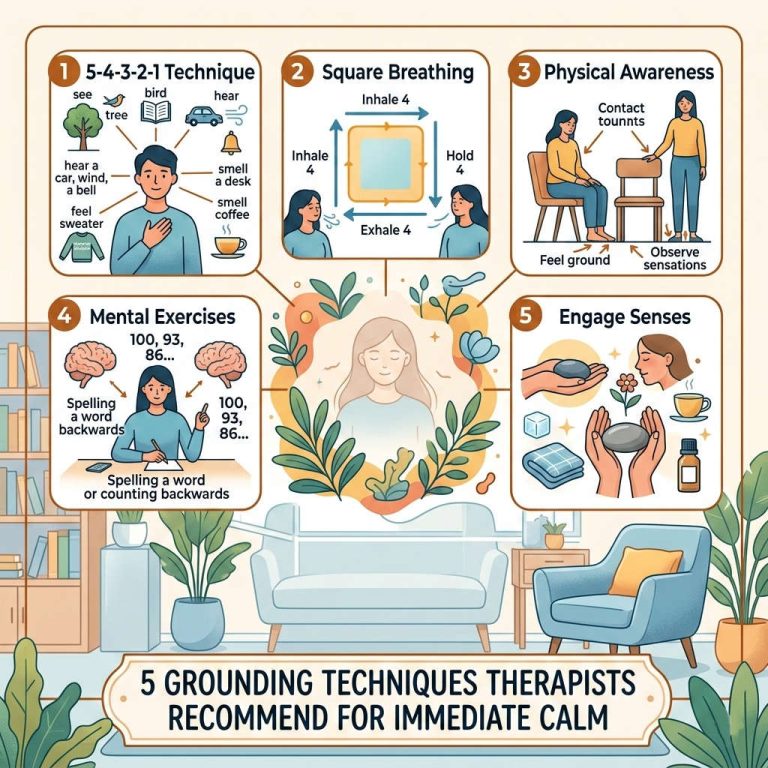
Grounding techniques are simple tools therapists use to help bring attention back to the present moment.
Instead of trying to “stop” anxious thoughts directly, grounding shifts focus toward physical sensations and real surroundings. This sends calming signals back to the nervous system and gradually reduces the intensity of anxiety.
Here are five grounding techniques widely recommended by mental health professionals.
1. The 5-4-3-2-1 Sensory Method
One of the most popular grounding techniques is the 5-4-3-2-1 exercise, which uses the senses to reconnect with your immediate environment.
Try identifying:
- 5 things you can see
- 4 things you can feel
- 3 things you can hear
- 2 things you can smell
- 1 thing you can taste
This exercise works because it redirects attention away from anxious thinking and toward sensory awareness.
By engaging the senses, the brain receives signals that the environment is safe — helping the stress response begin to settle.
Understanding how sensory input influences the nervous system also helps explain the science behind sound and emotional regulation, where predictable sensory patterns can promote calm.
2. Slow Breathing to Reset the Nervous System
Breathing is one of the fastest ways to influence your nervous system.
During anxiety, breathing often becomes shallow and rapid. Slow breathing signals the body that the threat has passed.
Try this simple pattern:
- Inhale slowly through the nose for 4 seconds
- Hold for 2 seconds
- Exhale slowly through the mouth for 6 seconds
Longer exhalations help activate the parasympathetic nervous system — the body’s natural relaxation response.
Even two minutes of slow breathing can significantly reduce physical anxiety symptoms.
3. Temperature Reset
A quick temperature change can interrupt the stress response.
Cold stimulation activates the body’s diving reflex, which slows heart rate and encourages calm.
Therapists sometimes recommend:
- Splashing cold water on your face
- Holding a cold object
- Washing hands with cool water
These physical sensations help redirect the brain’s focus away from racing thoughts and toward the body.
Grounding techniques like this work because anxiety is not just mental — as explained in what happens in your brain during anxiety, it is a full-body response.
4. Physical Anchoring
Physical movement reconnects awareness with the body.
Simple actions can help anchor attention in the present moment:
- pressing feet firmly into the floor
- stretching your arms slowly
- gently squeezing a stress ball
- rolling your shoulders
The goal is not exercise — it’s awareness.
Small movements help release muscle tension while reminding the brain that the body is safe and stable.
Supportive Idea
Some people find tactile tools helpful for grounding because they provide a physical sensation to focus on during anxious moments.
📦 Recommended Grounding Support Tool
Speks Magnetic Stress Relief Balls
These small magnetic balls can be shaped, rolled, and squeezed in your hands, providing tactile stimulation that helps redirect anxious energy.
✔ Encourages focus through touch
✔ Reduces restless energy
✔ Portable and discreet
👉 A simple tool that helps bring attention back to the present moment.
5. Naming Your Environment
Another therapist-recommended grounding technique is describing your surroundings out loud or mentally.
For example:
- “I’m sitting in my living room.”
- “There’s a window to my left.”
- “I can hear a car outside.”
This simple act re-engages the brain’s logical processing areas, helping shift activity away from the emotional alarm system.
By labeling reality, you gently guide the brain back to the present moment.
Why Grounding Techniques Work
Grounding exercises are effective because they interrupt the anxiety cycle.
When anxiety builds, the brain focuses inward on imagined threats. Grounding shifts attention outward to real sensory information.
This change sends a powerful signal: there is no immediate danger.
Over time, practicing grounding regularly can help train the brain to return to calm more quickly.
Many people combine grounding techniques with other natural calming strategies like those discussed in our guide on natural techniques to calm anxiety without medication.
❓ Frequently Asked Questions
– How quickly do grounding techniques work?
Some grounding techniques can reduce anxiety within minutes by redirecting attention and calming the nervous system.
– Are grounding exercises used in therapy?
Yes. Therapists frequently teach grounding skills for managing anxiety, panic attacks, and emotional overwhelm.
– Can grounding stop a panic attack?
Grounding techniques may reduce the intensity of panic symptoms by shifting focus and regulating breathing.
– Should grounding be practiced only during anxiety?
No. Practicing grounding during calm moments can make it easier to use effectively during stressful situations.
A Gentle Next Step
Grounding techniques help regulate the nervous system in the moment. Some people also explore structured audio programs designed to support relaxation more passively.
One example is The Brain Song, which uses carefully designed sound patterns intended to help the mind transition more easily from stress into calmer mental states.
You can explore it further and decide if it fits into your personal approach to emotional wellness.