Anxiety doesn’t always arrive loudly.
Sometimes it appears as restlessness you can’t explain, tension in your chest, or thoughts that refuse to slow down even when nothing is immediately wrong. Many people describe it as feeling constantly “on edge,” as if the mind is preparing for something that never happens.
While medication can be helpful and necessary for some individuals, many people first look for natural ways to calm anxiety — approaches that support the nervous system gently and consistently.
The encouraging news is that anxiety is not simply a mental problem. It is a whole-body response, which means small physical and environmental changes can significantly influence how you feel.
Understanding What Anxiety Really Is
Anxiety is your brain’s protection system working overtime.
When the brain senses uncertainty or potential danger, it activates the stress response to keep you alert. Heart rate increases, breathing becomes shallow, and attention narrows toward possible threats.
In short bursts, this response is useful.
But modern life often keeps this system partially activated throughout the day — something we explored more deeply when discussing how modern stress is rewiring our brains.
When the nervous system rarely returns to baseline, anxiety begins to feel constant.
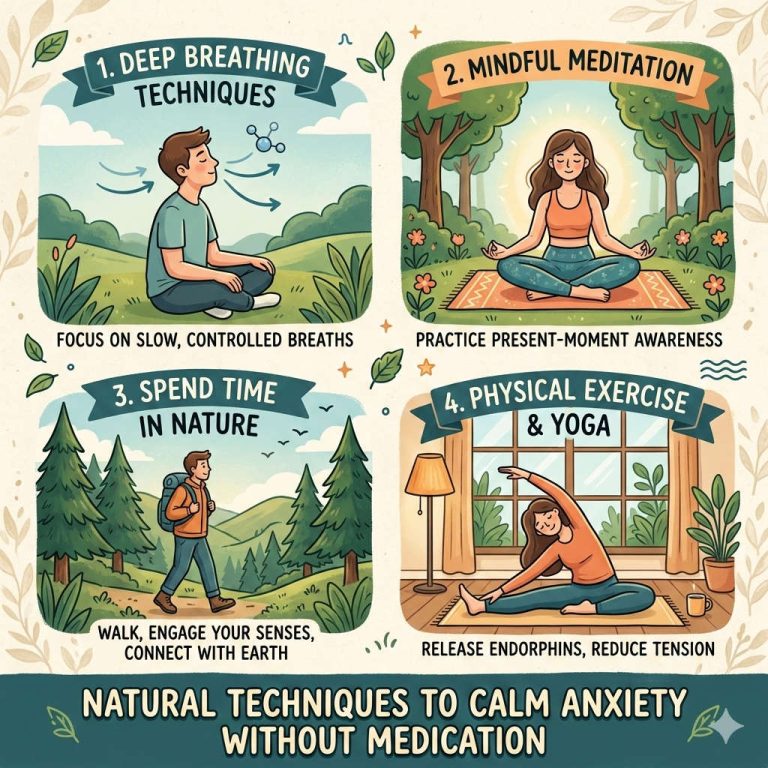
Technique 1: Slow the Breath to Calm the Brain
Breathing patterns directly influence the nervous system.
Fast, shallow breathing signals urgency. Slow, steady breathing communicates safety.
A simple technique:
- Inhale through your nose for 4 seconds
- Exhale slowly for 6 seconds
- Repeat for 2–3 minutes
Longer exhalations activate the body’s relaxation response, helping reduce physical anxiety signals.
Many people notice mental calm following physical regulation.
Technique 2: Ground Yourself Through the Senses
Anxiety often pulls attention into imagined future scenarios. Sensory grounding brings awareness back to the present moment.
Try the 5-4-3-2-1 method:
- 5 things you can see
- 4 things you can touch
- 3 things you can hear
- 2 things you can smell
- 1 thing you can taste
This exercise interrupts anxious thought loops by engaging real-time sensory processing.
Technique 3: Gentle Movement Instead of Stillness
When anxious energy builds, forcing stillness can sometimes increase discomfort.
Instead, allow the body to release activation gradually:
- slow walking
- stretching
- light household movement
- relaxed yoga
Movement completes the stress cycle and helps the brain recognize that the perceived threat has passed.
If relaxation itself feels difficult, you may relate to what we explored in why your brain struggles to relax, where overstimulation makes calm feel unfamiliar at first.
Technique 4: Create Predictable Evening Signals
The nervous system thrives on predictability.
Consistent evening cues — dim lighting, quieter sounds, or repeating the same calming activity — help the brain transition away from alertness.
Supportive Idea
Sound consistency can be especially helpful for anxious minds because unpredictable noise keeps attention partially activated.
📦 Recommended Calm Support Tool
White Noise Sound Machine for Relaxation & Sleep
A sound machine creates steady background audio that masks sudden noises and helps the brain settle into a calmer rhythm.
✔ Reduces environmental triggers
✔ Encourages relaxation before sleep
✔ Supports a consistent calming routine
👉 A gentle environmental signal that helps the nervous system slow down naturally.
Technique 5: Externalize Anxious Thoughts
Anxiety grows when thoughts stay trapped internally.
Writing worries down tells the brain they have been acknowledged and stored safely.
Even brief journaling can reduce mental repetition.
📘 Recommended Reflection Tool
The Five Minute Journal (Intelligent Change)
A structured journal with short prompts that help organize thoughts and shift attention toward emotional awareness and gratitude.
✔ Quick daily practice
✔ Encourages mental clarity
✔ Helps release repetitive thinking
👉 A simple habit many people use to calm evening anxiety gently.
Why Natural Techniques Work Over Time
Natural anxiety management focuses on repetition rather than instant relief.
Each calming action sends small safety signals to the brain. Over time, these signals reshape how the nervous system responds to stress.
Many readers notice that combining several small habits — breathing, movement, and calming environments — creates stronger results than relying on one technique alone.
If you’re building daily calming routines, you might also find helpful ideas in our guide on quieting an overactive mind naturally, which explores how small habits gradually restore mental balance.
❓ Frequently Asked Questions
– Can anxiety really improve without medication?
For mild to moderate anxiety, lifestyle and nervous system regulation techniques can significantly reduce symptoms. However, professional support should always be considered when anxiety becomes overwhelming or persistent.
– How quickly do natural anxiety techniques work?
Some methods, like breathing exercises, can create immediate calming effects, while long-term improvement typically develops over weeks of consistent practice.
– Why does anxiety feel physical, not just mental?
Anxiety activates the body’s stress response, affecting heart rate, muscles, breathing, and digestion. Physical calming techniques help because they address the nervous system directly.
– Is it normal for relaxation to feel uncomfortable at first?
Yes. When the brain is used to constant stimulation, slowing down may initially feel unfamiliar. With repetition, calm states become easier and more natural.
A Gentle Next Step
Alongside daily calming habits, some people explore guided audio experiences designed to help the brain transition into relaxed states more effortlessly.
One example is The Brain Song, an audio-based program created to support emotional balance using structured sound patterns that encourage calmer mental activity.
You can explore it further and decide whether it aligns with your personal wellness approach.