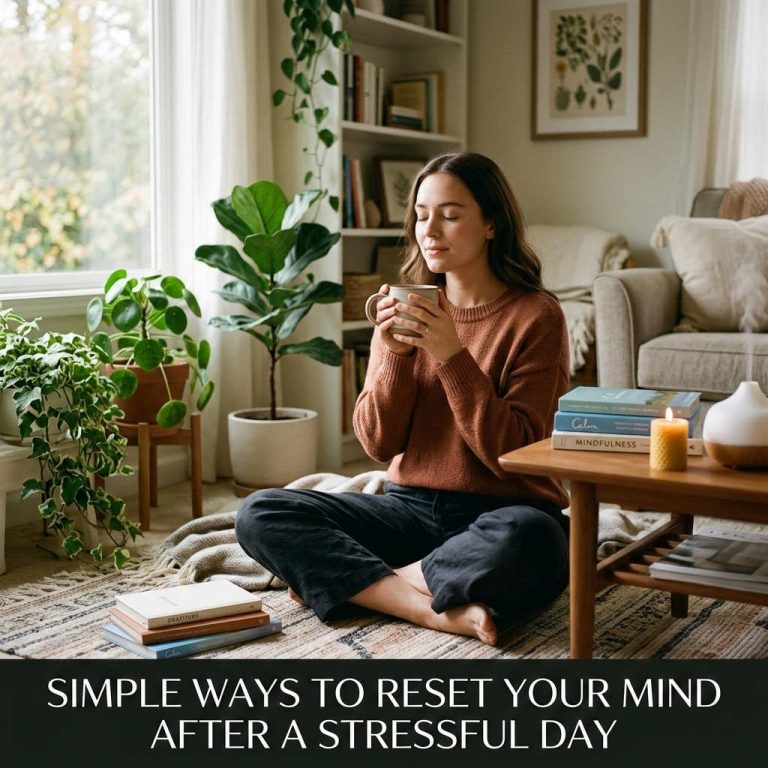
Some days don’t end when work finishes.
Your body comes home, but your thoughts remain active — replaying conversations, anticipating tomorrow, or carrying tension that refuses to fade. Even quiet evenings can feel mentally loud.
Stress doesn’t disappear automatically with time. The brain needs signals that the demanding part of the day is truly over.
Learning how to reset your mind after stress isn’t about escaping responsibilities. It’s about helping your nervous system transition from doing mode into recovery mode.
And that transition can be surprisingly simple.
Many people struggle with relaxation itself, which we explore further in our article on why your brain struggles to relax.
Why Stress Lingers After the Day Ends
During stressful moments, your brain releases hormones designed to keep you alert and responsive. This state is helpful when solving problems but exhausting when prolonged.
The challenge is that modern stress rarely has a clear ending. Emails, notifications, and unfinished thoughts prevent psychological closure.
Without a reset ritual, the brain continues scanning for problems — even during rest.
This is why many people experience:
- mental exhaustion at night
- difficulty relaxing after work
- racing thoughts before sleep
- emotional irritability despite physical tiredness
Your brain isn’t refusing to relax; it simply hasn’t received a clear signal that it’s safe to slow down.
The Power of Transition Rituals
One of the most effective ways to calm the mind is creating a consistent transition between activity and rest.
A reset ritual tells your nervous system:
“The demanding part of the day is finished.”
Importantly, this ritual does not need to be complicated. The brain responds best to small, repeatable actions.
Examples include:
- changing clothes immediately after arriving home
- stepping outside for fresh air
- washing your hands slowly with warm water
- dimming lights in the evening
These simple behaviors create psychological separation between stress and recovery.
Movement Helps Release Stored Stress
Stress isn’t only mental — it lives in the body.
When tension builds, muscles remain slightly activated even after the stressful event ends. Gentle movement helps discharge that lingering activation.
You don’t need an intense workout. In fact, calming movement works better:
- a slow walk
- light stretching
- relaxed breathing with motion
- gentle yoga
Movement signals completion to the stress response cycle, allowing the brain to shift toward calm.
Building small daily calming habits can make these transitions easier, as explained in our guide on quieting an overactive mind naturally.
Sensory Signals That Calm the Nervous System
Your brain constantly interprets sensory information to determine whether you are safe or threatened.
Soft lighting, warmth, and consistent sound patterns can quietly encourage relaxation without requiring effort.
Many people notice that certain sensory experiences — like rain sounds or soft background noise — make it easier to unwind because they reduce unpredictable stimuli.
Supportive Idea
Creating a stable auditory environment in the evening can help the brain disengage from alertness. Sudden noises or silence filled with intrusive thoughts often keep the mind active.
📦 Recommended Calm Environment Tool
White Noise Sound Machine for Relaxation & Sleep
A gentle sound machine produces consistent background audio that helps mask distracting noises and creates a predictable calming atmosphere.
✔ Encourages mental unwinding after busy days
✔ Supports smoother transition into rest
✔ Helps reduce evening overstimulation
👉 A simple way to signal to your brain that the day is slowing down.
Writing Can Help the Mind Let Go
One reason stress follows us into the evening is unfinished thinking. The brain keeps reviewing problems because it fears forgetting something important.
Writing externalizes those thoughts.
When worries move from your mind onto paper, the brain no longer needs to hold them actively.
Supportive Idea
Short, structured journaling sessions often work better than long reflections because they create closure rather than analysis.
📘 Recommended Reflection Tool
The Five Minute Journal (Intelligent Change)
A guided journal designed to encourage gratitude and emotional clarity through brief daily prompts.
✔ Takes only a few minutes
✔ Helps organize racing thoughts
✔ Encourages emotional balance through reflection
👉 A quiet evening habit that helps the mind release the day gently.
Why Consistency Matters More Than Duration
Many people believe relaxation requires long routines, but the brain responds more strongly to predictability than length.
A five-minute ritual repeated daily trains your nervous system faster than occasional long self-care sessions.
Over time, your brain begins associating specific actions — lighting, sounds, writing, or movement — with safety and recovery.
Eventually, calm becomes automatic.
If you’ve noticed how ongoing stress patterns can reshape mental habits, you may also find helpful context in our article on how modern stress is rewiring our brains.
❓ Frequently Asked Questions
– How long should a mental reset routine take?
Even 5–10 minutes can be effective. The key factor is consistency, not duration. Repeated signals help the brain learn when it’s time to relax.
– Why do stressful thoughts appear mostly at night?
When distractions decrease, the brain finally processes unresolved experiences from the day. Reset rituals help provide closure before bedtime.
– Is it better to relax alone or with background sound?
It depends on the person. Some individuals relax best in silence, while others benefit from gentle, consistent sound that reduces mental stimulation.
– Can small habits really reduce stress levels?
Yes. Small repeated behaviors gradually retrain the nervous system, helping it transition more easily from alertness into recovery states.
A Gentle Next Step
Alongside daily reset habits, some people explore guided audio experiences designed to help the brain move more easily from stress into relaxation.
One example is The Brain Song, a sound-based program created to support emotional balance through structured auditory patterns that encourage calmer mental states.
You can learn more about it and decide whether it fits your personal wellness routine.