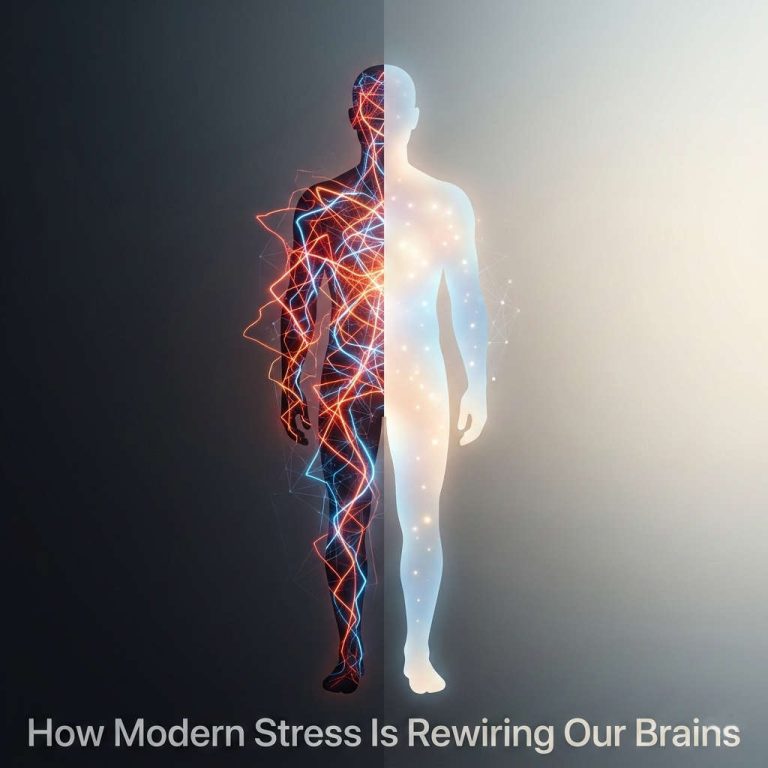
Stress used to be temporary.
Thousands of years ago, stress appeared during real danger — escaping a threat, finding food, or surviving harsh conditions. Once the situation passed, the brain returned to balance.
Today, the danger rarely ends.
Deadlines, notifications, financial pressure, constant information, and emotional overload keep the brain in a nearly continuous stress response. And modern neuroscience shows something important:
Chronic stress doesn’t just affect how you feel — it can actually change how your brain works.
The Brain’s Original Stress System
Your brain is equipped with a powerful survival mechanism known as the stress response.
When a challenge appears, the body activates two major systems:
- The sympathetic nervous system
- The HPA axis (hypothalamic–pituitary–adrenal system)
These systems release hormones like cortisol and adrenaline, preparing you to act quickly. In short bursts, stress is beneficial — sharpening focus and reaction time.
The problem begins when stress never fully switches off.
What Happens When Stress Becomes Constant
Modern stress is different from ancient stress because it is psychological and ongoing rather than short and physical.
When cortisol stays elevated for long periods, researchers observe measurable brain changes:
- Memory centers become less efficient
- Emotional reactions intensify
- Decision-making weakens
- Focus becomes harder to maintain
Long-term stress can impair the hippocampus (memory and learning), overstimulate the amygdala (fear and emotion), and reduce effectiveness of the prefrontal cortex (logic and planning).
In simple terms:
👉 The brain shifts from thinking mode to survival mode.
The Three Brain Areas Most Affected by Stress
1. The Hippocampus — Memory and Learning
The hippocampus helps organize memories and process new information.
Chronic stress exposure can reduce its volume and weaken neural connections, leading to forgetfulness and difficulty concentrating.
This explains why stressed people often say:
- “I can’t think clearly.”
- “My memory feels worse lately.”
It’s not laziness — it’s biology.
2. The Amygdala — The Brain’s Alarm System
The amygdala detects threats and triggers emotional responses.
Under chronic stress, this region becomes more active and more sensitive, increasing anxiety and emotional reactivity.
Small problems can suddenly feel overwhelming because the brain is primed to expect danger.
3. The Prefrontal Cortex — Rational Thinking
This area helps you:
- plan ahead
- regulate emotions
- make thoughtful decisions
Prolonged stress weakens its regulatory control, allowing emotional impulses to dominate behavior.
That’s why stress often leads to impulsive decisions or difficulty focusing.
Stress Literally Changes Brain Communication
Stress doesn’t only affect individual brain areas — it changes how regions communicate with each other.
Research shows chronic stress disrupts neurotransmitters like dopamine and serotonin while increasing inflammation and oxidative stress, reducing neuroplasticity — the brain’s ability to adapt and form new connections.
Over time, neural pathways favor fast emotional reactions instead of calm reasoning.
The brain learns stress the same way it learns habits: through repetition.
Why Modern Life Accelerates These Changes
Several modern factors keep the stress system activated:
- Constant digital stimulation
- Lack of mental downtime
- Poor sleep cycles
- Information overload
- Reduced exposure to natural environments
Chronic activation can even contribute to sleep problems, brain fog, and emotional exhaustion.
Your brain isn’t malfunctioning — it’s adapting to an environment that rarely signals safety.
Why Mental Clarity Feels Harder Than Ever
The Good News: The Brain Can Rewire Back
Here’s the hopeful part.
The same neuroplasticity that allows stress to reshape the brain also allows recovery.
Studies show that reducing stress and introducing calming experiences can help restore healthier brain patterns over time.
The brain continuously updates itself based on repeated experiences.
Small daily signals of calm can gradually rebalance stress circuits.
Quieting an Overactive Mind Naturally
Why Passive Relaxation Is Becoming Important
Many people struggle with traditional stress-management advice because it requires effort from an already exhausted brain.
This is why interest is growing in passive relaxation approaches — methods that help guide the nervous system toward calm without demanding intense focus.
Sound-based relaxation is one example being explored, as certain auditory patterns may help encourage slower brain activity associated with rest and emotional regulation.
Instead of forcing calmness, these approaches allow the brain to transition naturally.
A Gentle Next Step
If you’re exploring ways to help your brain shift out of constant stress mode, some people are experimenting with structured audio experiences designed to support relaxation and emotional balance.
One example is The Brain Song, which uses guided sound patterns intended to help the mind move toward calmer mental states.
You can explore it further and decide whether it fits your personal wellness approach.