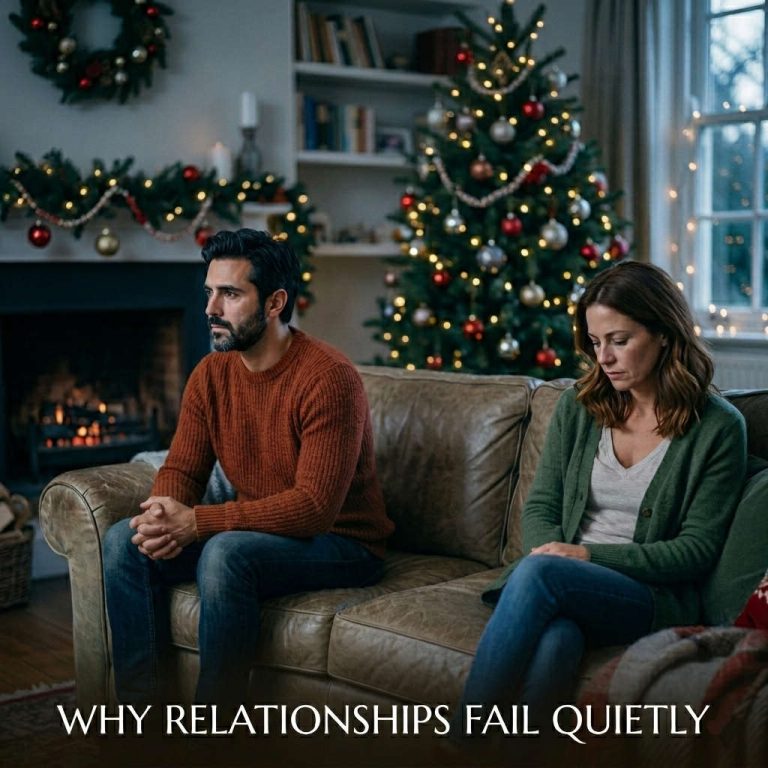
Most relationships do not end because of one dramatic event.
They end slowly.
Not with shouting or betrayal — but with distance that grows so gradually neither person notices it at first.
Conversations become shorter.
Laughter becomes less frequent.
Effort becomes optional instead of natural.
From the outside, everything looks fine.
But internally, emotional connection is fading.
Relationships rarely collapse overnight. They weaken quietly when emotional needs stop being felt, understood, or expressed.
And because nothing obvious seems “wrong,” couples often miss the warning signs until the emotional bond has already begun to disappear.
The Myth of the Big Breakup Moment
Movies teach us that relationships end because of major conflicts.
Real life is different.
Most relationships fail through emotional neglect, not emotional explosions.
This happens when:
- partners stop sharing inner thoughts
- appreciation becomes rare
- stress replaces curiosity
- communication becomes logistical instead of emotional
No single moment causes damage — but small emotional disconnections accumulate over time.
Silence slowly replaces intimacy.
Emotional Distance Happens in Small Daily Moments
Connection is built through small interactions repeated consistently:
- asking how someone truly feels
- listening without distraction
- sharing small experiences
- expressing appreciation
When these disappear, emotional safety weakens.
People often assume love itself has faded, when in reality emotional attention has faded.
The relationship didn’t suddenly fail — it slowly stopped being emotionally nourished.
Stress Quietly Replaces Connection
Modern life adds constant mental pressure. Work, responsibilities, and personal stress consume emotional energy.
When stress rises, couples unintentionally shift into survival mode.
They talk about tasks instead of feelings.
They solve problems instead of nurturing connection.
Over time, partners begin to feel emotionally alone — even while still together.
Supportive Idea:
Simple daily reflection habits can help individuals reconnect with their own emotions, making it easier to reconnect with a partner as well.
📘 Recommended Emotional Awareness Tool
The Five Minute Journal (Intelligent Change)
A guided daily journal designed to build emotional awareness, gratitude, and intentional reflection through short structured prompts.
✔ Encourages emotional clarity
✔ Helps identify relationship patterns
✔ Builds mindful communication habits
👉 Understanding your own emotions is often the first step toward repairing connection.
The Danger of Assuming “Everything Is Fine”
Quiet relationship decline often continues because both partners assume the other person is okay.
People hesitate to speak up because they want to avoid conflict.
Ironically, avoiding small uncomfortable conversations creates larger emotional distance later.
Healthy relationships allow gentle honesty before resentment builds.
Silence protects comfort in the short term but damages intimacy in the long term.
Emotional Safety Slowly Disappears
One of the earliest signs of quiet relationship failure is the loss of emotional safety.
Partners begin to:
- filter what they say
- avoid vulnerable topics
- stop sharing worries or dreams
- withdraw emotionally to prevent tension
When vulnerability disappears, connection weakens.
If you want a deeper understanding of how emotional safety shapes attraction and connection, read Emotional Safety: The Missing Piece in Most Relationships.
The Body Notices Disconnection Before the Mind Does
Interestingly, emotional disconnection often appears physically first:
- conversations feel draining
- silence feels heavy instead of peaceful
- affection feels forced
- presence feels distant
The nervous system detects emotional change before conscious awareness catches up.
Supportive Idea:
Calming the nervous system individually can help reduce emotional defensiveness and reopen connection.
🫖 Recommended Calm Support
Traditional Medicinals Organic Chamomile Herbal Tea
A gentle herbal tea known for promoting relaxation and helping the body transition out of stress mode.
✔ Encourages calm conversations
✔ Supports emotional regulation
✔ Creates relaxing evening rituals
👉 Small calming rituals can make emotional reconnection easier.
Why Couples Often Realize Too Late
Because quiet disconnection lacks drama, many couples only recognize the problem when one partner emotionally checks out completely.
At that stage, one person may feel shocked while the other feels emotionally exhausted.
The breakup appears sudden — but emotionally, it has been developing for months or years.
This is why prevention matters more than repair.
Connection must be maintained intentionally, not assumed permanently.
Rebuilding Before It’s Too Late
The encouraging truth is that quiet relationship decline is often reversible — especially when recognized early.
Repair begins with small shifts:
- becoming curious again
- listening without fixing
- sharing feelings regularly
- creating calm shared moments
Relationships thrive not because problems never appear, but because emotional attention returns consistently.
If a relationship has started feeling distant or emotionally confusing, understanding emotional dynamics can change everything.
The Ex Factor Guide explains why attraction fades, why distance happens, and how emotional behavior influences reconnection after conflict or breakup.
👉 Discover the emotional patterns behind connection and recovery with the Ex Factor Guide.