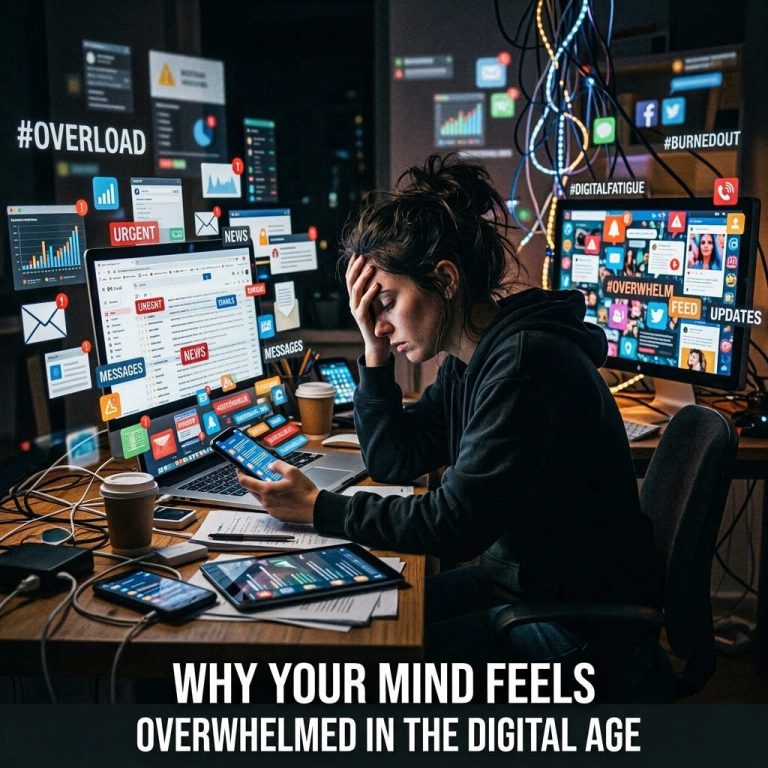
Many people today feel mentally exhausted even when they haven’t done physically demanding work.
After scrolling through news, emails, social media, and notifications, the brain can feel foggy, tense, and overstimulated.
This sense of mental overload is increasingly common — and it’s not just in your head.
The modern digital environment places unique demands on the brain that it was never designed to handle continuously. Understanding why this happens can help you take practical steps to protect your mental clarity and emotional balance.
The Brain Was Not Designed for Constant Input
For most of human history, the brain processed information slowly and directly from the surrounding environment.
People focused on:
- conversations
- physical tasks
- natural surroundings
- immediate survival needs
Today, however, the brain must process thousands of pieces of information daily.
News alerts, emails, advertisements, messages, and endless social feeds create an environment where the brain rarely gets a break from stimulation.
This constant stream of information contributes to the same stress patterns discussed in how modern stress is rewiring our brains, where prolonged stimulation keeps the nervous system in a semi-alert state.
Information Overload and Decision Fatigue
Every piece of information requires the brain to make micro-decisions.
Should you read the article?
Respond to the message?
Open the notification?
Ignore it?
Individually, these decisions seem small. But over time, they accumulate into what psychologists call decision fatigue.
When the brain processes too many choices, mental energy declines. This is why people often feel drained after long periods of digital engagement — even if they were simply scrolling.
The Dopamine Loop of Digital Platforms
Many digital platforms are intentionally designed to capture attention.
Notifications, likes, comments, and endless feeds activate the brain’s dopamine system — the same reward system involved in motivation and habit formation.
Each small reward encourages continued engagement.
The result is a feedback loop where the brain keeps searching for the next piece of stimulation.
Over time, this loop can make it harder for the mind to tolerate quiet moments, which is why many people struggle with the experience described in why your brain struggles to relax even when you want to.
Multitasking Is a Myth
Digital environments encourage multitasking — switching rapidly between tasks.
However, neuroscience shows the brain does not truly multitask.
Instead, it switches attention rapidly, which consumes more cognitive energy and increases mental fatigue.
Common examples include:
- checking messages while working
- watching videos while browsing
- responding to notifications during conversations
Each switch forces the brain to reorient itself, increasing cognitive load.
This constant shifting contributes significantly to feelings of overwhelm.
Why Digital Overload Increases Anxiety
The brain’s threat detection system — the amygdala — constantly evaluates incoming information.
Negative news, urgent messages, and emotionally charged content activate this system repeatedly throughout the day.
As explained in what happens in your brain during anxiety, repeated activation of the stress response keeps the nervous system alert even when no immediate danger exists.
Without breaks from stimulation, the brain never fully resets.
The Importance of Mental Recovery Time
Just as muscles need rest after exercise, the brain requires periods of reduced stimulation to recover.
These recovery periods allow the nervous system to return to baseline and restore focus.
Healthy mental recovery can include:
- quiet walks
- reading without notifications
- deep breathing exercises
- mindful pauses during the day
Even small breaks can help reduce cognitive overload and restore clarity.
Using Sound to Create Mental Space
For some people, complete silence can feel uncomfortable after long periods of digital stimulation.
Gentle, predictable background sound may help create a calmer sensory environment while reducing sudden interruptions.
Supportive Idea
A consistent background sound can help mask distracting noise and support mental relaxation after a long day of digital input.
📦 Recommended Relaxation Support Tool
White Noise Sound Machine for Sleep and Focus
A white noise machine produces steady background sound that helps reduce distracting noise and encourages a calmer mental environment.
✔ Helps reduce digital overstimulation effects
✔ Encourages relaxation and focus
✔ Supports deeper sleep after screen-heavy days
👉 A simple tool that helps create a quieter mental atmosphere.
(Insert Amazon affiliate link on product name.)
Small Digital Habits That Protect Your Brain
Reducing digital overwhelm doesn’t require eliminating technology.
Small changes can significantly improve mental balance:
- turning off unnecessary notifications
- setting specific times to check email
- limiting social media scrolling
- taking short tech-free breaks during the day
These habits help reduce the constant flow of stimulation and allow the brain to recover.
Many people combine these habits with natural techniques to calm anxiety without medication to maintain emotional balance in a highly connected world.
❓ Frequently Asked Questions
– Why does the internet make my brain feel tired?
Constant information input forces the brain to process more data than it evolved to handle, leading to cognitive fatigue.
– Is digital overload linked to anxiety?
Yes. Repeated exposure to stimulating or negative information can activate the brain’s stress response system.
– How much screen time is too much?
The impact varies by person, but regular breaks from screens help reduce mental fatigue.
– Can digital detox help mental clarity?
Even short breaks from digital input can help the brain reset and improve focus.
A Gentle Next Step
Many people exploring ways to reduce digital overwhelm also look for calming sensory experiences that help the brain transition out of constant stimulation.
One option some individuals explore is The Brain Song, a structured audio program designed to support relaxation and emotional balance through carefully arranged sound patterns.
You can learn more about it and decide whether it fits your personal wellness routine.